 Request a Call Back
 WhatsApp
 +91 9999666611
Studying Data Science in Australia gives students access to globally recognized universities, industry-focused learning, and career opportunities i...

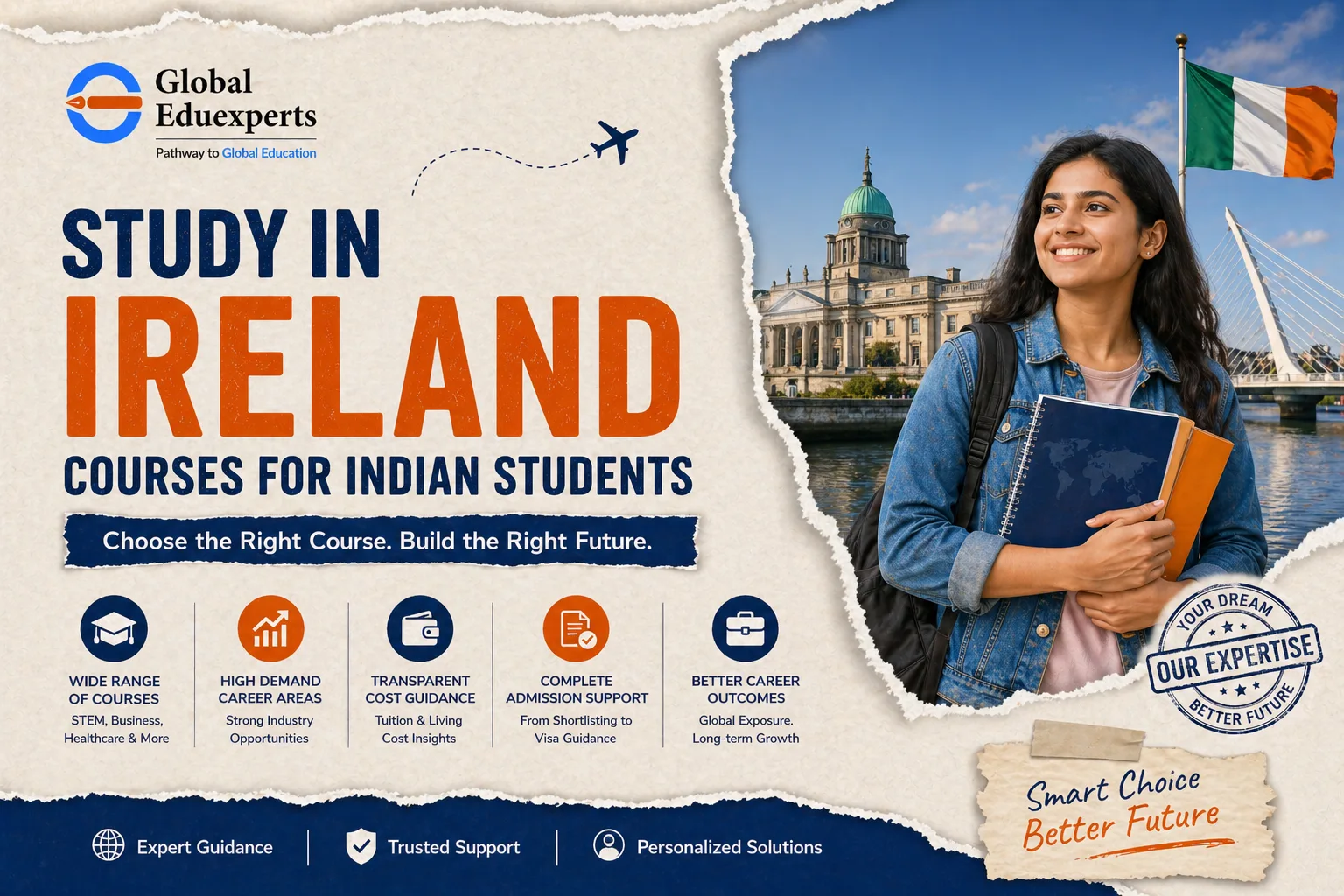
Guidance for courses in Ireland helps Indian students choose suitable academic programs based on career goals, industry demand, eligibility, and budget. It supports students exploring STEM, business, healthcare, pharmaceutical, diploma, and short-term study options by providing clarity on admissions, tuition costs, and future career opportunities, leading to more informed study abroad decisions and stronger long-term professional growth in Ireland.
Ireland started getting attention quietly.
A few years ago, many Indian students focused mainly on countries like the UK, USA, or Australia. But recently, Ireland has moved into the conversation much more seriously — especially among students looking for a balance between quality education, career opportunities, and a smaller, more focused international environment.
That’s why searches around courses in Ireland have grown steadily.
But once students begin researching properly, they realize something important:
Ireland is not just about studying abroad. It’s about choosing courses that connect directly with industries growing inside the country.
The education system in Ireland is practical and industry-oriented.
Students choosing courses in Ireland for Indian students often notice:
The system encourages independent learning, but at the same time, students often feel more connected to faculty and coursework.
That balance works well for many international students.
There isn’t just one reason.
Several factors together have made Ireland more attractive:
Students also see Ireland as slightly more manageable compared to some larger countries where competition and living pressure feel heavier.
This is where outcomes begin changing.
Students sometimes assume:
Any international degree will create opportunities.
Not necessarily.
Ireland’s job market is closely connected to specific industries. That means course selection directly affects employability.
For example:
That’s why students exploring best courses to study in Ireland now focus more on career alignment than just university rankings.
Students often describe Ireland differently after arriving.
The environment feels:
But at the same time, students also realize that opportunities depend heavily on:
The country may be smaller. Expectations are not.
If you are exploring study in Ireland courses, the better question is not:
Is Ireland becoming popular?
It should be:
Does the course I’m choosing connect realistically with the industries and opportunities Ireland actually offers?
Because in Ireland, the connection between education and industry tends to be very direct.
And students who understand that early usually make much stronger decisions later.
Explore Study in Ireland guidance to understand universities, student life, and long-term career opportunities in Ireland.
Students usually start with one simple question:
Which courses actually lead to jobs in Ireland?
And honestly, that’s the right place to begin.
Because Ireland’s education system is closely tied to its economy. The country may be smaller compared to other study destinations, but the industries growing there are very specific — and course selection matters a lot because of that.
That’s why students researching courses in Ireland now focus more on employability than just rankings.
Ireland has become a major hub for:
Global companies have established large operations there, which naturally increases demand for certain skill sets.
That’s one reason high demand courses in Ireland continue attracting international students.
Some fields repeatedly stand out because they connect directly with Ireland’s strongest industries.
| Course Area | Why It’s Popular | Career Direction |
|---|---|---|
| Data Science & Analytics | Strong tech and business demand | Data Analyst, BI Specialist |
| Information Technology | Expanding digital economy | Software Developer, Cybersecurity |
| Pharmaceuticals & Biotechnology | Ireland’s major pharma sector | Research, Manufacturing, Quality Roles |
| Finance & Accounting | International financial services presence | Financial Analyst, Audit, Banking |
| Business & Management | Multinational corporate environment | Operations, Marketing, Management |
These are commonly considered among the best courses to study in Ireland because employers actively recruit within these sectors.
Ireland’s job market is skill-focused.
Students who perform better after graduation are usually the ones who:
Generic degrees without specialization often create slower career movement.
That’s why students exploring top courses in Ireland universities increasingly prefer programs linked to clear workforce demand.
Many students focus heavily on tech. But Ireland’s pharmaceutical sector is equally important.
The country hosts operations from several global pharma companies, which creates opportunities in:
That’s why interest in healthcare and science-based programs has steadily increased among Indian students.
This happens more often than expected.
Students sometimes:
Later, they struggle with the actual field itself.
Because industry demand helps… but only if the student can realistically grow within that industry.
If you are exploring ireland courses for indian students, the better question is not:
Which course sounds most popular right now?
It should be:
Which course connects both with Ireland’s industry demand and my own long-term strengths?
Because opportunities in Ireland are usually very skill-driven.
And students who align their course with realistic career direction tend to benefit the most later on.
Compare tuition fees and living expenses through the Ireland Cost guide before selecting your course.
STEM courses are one of the biggest reasons Ireland has become more visible among international students.
Especially Indian students.
Because once students start researching courses in Ireland, they quickly notice something important — Ireland’s economy is heavily connected to technology, innovation, pharmaceuticals, and research-driven industries.
And STEM sits right in the middle of that growth.
Ireland has built a strong reputation as a European base for global tech companies.
That changes the education landscape too.
Students choosing stem courses in ireland often benefit from:
The connection between universities and industries feels much more direct here compared to what many students expect initially.
Certain programs consistently stay relevant because they align closely with Ireland’s workforce needs.
| STEM Course Area | Why It Stands Out | Career Direction |
|---|---|---|
| Data Science & Analytics | Growing data-driven industries | Data Analyst, BI Specialist |
| Computer Science & IT | Large technology ecosystem | Developer, Cybersecurity Roles |
| Biotechnology & Life Sciences | Expanding pharmaceutical sector | Research, Clinical, Lab Roles |
| Artificial Intelligence | Increasing automation demand | AI Engineer, Machine Learning |
| Engineering | Infrastructure and manufacturing support | Mechanical, Civil, Electrical Roles |
These are often considered among the high demand courses in Ireland because industries actively recruit technical graduates.
This is where Ireland feels slightly different from some other countries.
Global companies operating there create demand not only for experienced professionals… but also for skilled graduates.
That’s why students exploring masters in ireland for indian students often prioritize technical programs.
The environment naturally supports:
But competition exists too.
STEM fields usually provide:
But here’s the important part students sometimes miss.
STEM is not “safe” simply because it’s technical.
It still requires:
Without that effort, even good programs lose value quickly.
Irish universities often emphasize:
Students who enjoy solving problems practically usually adapt better to this system.
Those expecting only theory-based learning sometimes struggle initially.
If you are exploring courses in Ireland for Indian students, the better question is not:
Which STEM course pays the highest salary?
It should be:
Which technical field can I realistically continue building skills in for the next several years?
Because STEM creates opportunities.
But long-term career growth usually comes from capability, consistency, and how well students adapt to changing industries over time.
Compare global STEM opportunities through USA Courses before finalizing your study destination.
Business courses in Ireland have become much more strategic than they used to be.
Earlier, students mostly searched for a simple MBA. Now, students exploring courses in Ireland look deeper into:
Because business education today is less about the degree name… and more about how well the specialization matches the market.
Ireland’s business environment feels different from larger countries.
It has:
That’s why students researching mba in ireland often see it as a more industry-connected option rather than just an academic qualification.
The country’s smaller size also creates closer interaction between universities and employers in some sectors.
A few programs consistently stand out among international students.
| Business Course Area | Why It’s Popular | Career Direction |
|---|---|---|
| Business Analytics | Data-focused business decision making | Analyst, Strategy Roles |
| Finance | Strong multinational financial sector | Banking, Investment, Corporate Finance |
| Marketing | Digital business growth | Brand Management, Digital Marketing |
| Management | Broad operational understanding | Operations, Leadership Roles |
These are often considered among the best courses to study in Ireland because they align with Ireland’s corporate and technology-driven industries.
This shift is very noticeable now.
Students who earlier preferred only general MBA programs are increasingly moving toward:
Why?
Because employers now expect business graduates to understand both strategy and data.
That combination creates stronger opportunities.
Ireland hosts operations from several global companies, especially in:
That exposure affects the kind of business skills universities emphasize.
Students often experience:
This helps with employability… but it also demands active participation.
This happens more often than students expect.
Some choose:
Later, they realize the market values practical capability more than course titles alone.
Communication, adaptability, and networking matter heavily in business careers.
If you are exploring ireland courses for indian students, the better question is not:
Which MBA sounds most impressive?
It should be:
Which business specialization realistically fits both my strengths and the industries growing in Ireland?
Because business education creates opportunities.
But long-term growth usually comes from how effectively students apply those skills in real professional environments later on.
Explore UK Courses to compare MBA and business study opportunities across leading global universities.
Healthcare and pharmaceutical education is one of the reasons Ireland quietly became important for international students.
Especially for students looking beyond just IT and business.
When students begin exploring courses in Ireland, many eventually notice how strong Ireland’s pharmaceutical and life sciences sector actually is. The country hosts manufacturing, research, and operations for several global healthcare and biotech companies.
That changes the education opportunities too.
Ireland’s healthcare and pharmaceutical industries continue expanding because of:
That’s why students researching high demand courses in Ireland increasingly consider:
The opportunities are more industry-connected than many students initially expect.
Healthcare and pharmaceutical courses are rarely only classroom-based.
Students often experience:
For example:
Students who enjoy analytical and research-oriented environments usually adapt better here.
Healthcare and life science programs usually expect:
Programs connected to healthcare fields may also have stricter documentation or practical expectations.
That surprises some students later.
This is where Ireland stands out quietly.
The country has become a major pharmaceutical and biotech hub within Europe.
That creates opportunities in:
Students choosing courses in Ireland for Indian students in healthcare and life sciences often benefit from this industry presence.
But competition still exists.
Many students assume:
Healthcare and pharmaceutical fields automatically guarantee jobs.
Not exactly.
The industries value:
Without those, even strong academic programs become difficult to convert into career growth.
Irish universities and institutes often emphasize:
Students expecting only theory-based study sometimes find the workload more intensive than anticipated.
If you are exploring study in Ireland courses, the better question is not:
Which healthcare field looks most popular right now?
It should be:
Which scientific or healthcare environment can I realistically see myself working in long term?
Because these industries create strong opportunities.
But they also demand patience, precision, and continuous learning over time.
Compare healthcare and pharmaceutical education options through Australia Courses for international students.
Not every student wants a long academic pathway.
Some students are looking for something more practical — shorter duration, lower overall cost, and faster entry into the workforce. That’s where short term courses in Ireland and diploma programs start becoming attractive.
And for the right student, this route can work surprisingly well.
But it works differently from traditional university degrees.
These programs are generally designed around:
Students exploring courses in Ireland for Indian students through diploma or certificate pathways often choose:
Most programs range from:
| Program Type | Typical Duration | Main Focus |
|---|---|---|
| Certificate Courses | 6–12 months | Skill-specific training |
| Diploma Programs | 1–2 years | Practical industry preparation |
| Vocational-Style Courses | Varies | Workforce-focused learning |
The structure is usually more applied and less research-heavy.
There are a few common reasons students move toward diploma and vocational programs:
For students focused on employability rather than academic specialization, these programs often feel more realistic financially and professionally.
Ireland’s education system tends to encourage:
That benefits students who prefer learning by doing rather than only theory-based education.
Some diploma programs also include:
And that exposure helps students understand workplace expectations early.
This is important.
Short-term programs can help students move into work faster… but they do not automatically create the same long-term career trajectory as specialized degrees.
Some students later choose:
That progression is fairly common.
Students often focus only on lower cost.
But the more important question is:
Without that clarity, even affordable programs may not lead to satisfying outcomes.
If you are exploring study in Ireland courses, the better question is not:
Which course finishes the fastest?
It should be:
Which program builds practical skills that can realistically support my career growth over time?
Because quick outcomes matter.
But sustainable career growth usually matters much more later.
Explore Study in Dubai pathways for career-focused diploma and short-term education opportunities.
This is usually the point where students stop imagining and start calculating.
Because once you begin seriously exploring courses in Ireland, the financial side becomes impossible to ignore. Tuition fees are one part of it. But accommodation, transport, food, and daily life quickly become equally important.
And Ireland is not exactly a “cheap” destination anymore.
Still, many students choose it because the balance between education quality, industry exposure, and work opportunities often feels worthwhile long term.
Not every course costs the same.
In fact, the difference between programs can become significant.
| Course Type | Average Tuition Fees Per Year | Main Cost Factors |
|---|---|---|
| Undergraduate courses in Ireland | €10,000 – €25,000 | University and specialization |
| Masters in Ireland for Indian students | €12,000 – €35,000 | Technical vs non-technical field |
| MBA in Ireland | €20,000 – €40,000+ | Business school reputation |
| Diploma and certificate programs | €6,000 – €18,000 | Duration and institute type |
Healthcare, pharmaceutical, and specialized technical programs generally sit on the higher side.
Diploma courses are usually more affordable comparatively.
This is where budgets often become unrealistic.
Students carefully estimate tuition… but underestimate everyday life.
Living expenses in Ireland usually include:
On average, students may spend:
Dublin tends to be more expensive than smaller cities.
And accommodation availability itself has become an important factor recently.
This part gets overlooked too often.
Different courses in Ireland for Indian students create different financial outcomes over time.
For example:
So the course influences not just study experience… but long-term financial return too.
Ireland allows international students to work part-time under permitted visa conditions.
That helps students manage:
But many students overestimate how much part-time work can fully cover.
It helps reduce pressure. It usually does not replace proper financial planning.
This happens regularly.
Students budget for tuition and rent… but overlook:
Small expenses start adding up quickly after arrival.
If you are exploring study in Ireland courses, the better question is not:
Which course costs the least?
It should be:
Which course creates a realistic balance between affordability, employability, and long-term career growth?
Because low cost alone rarely creates good outcomes.
And students who plan financially with realism usually adjust much more comfortably once they arrive in Ireland.
Looking for financial support? Explore Ireland Scholarships to reduce study and living expenses.
This is usually where students begin comparing their profile with university expectations.
And honestly, that moment creates a lot of uncertainty.
Because students exploring courses in Ireland often wonder:
The good part is that Ireland’s admission process is generally structured and transparent. But requirements still vary depending on:
And that’s where students need clarity.
The first thing universities evaluate is previous education.
For example:
| Course Level | Typical Academic Requirement |
|---|---|
| Undergraduate courses in Ireland | Completion of 12th grade |
| Masters in Ireland for Indian students | Bachelor’s degree in relevant field |
| Diploma and certificate programs | Varies by course and institution |
Technical, healthcare, and research-based programs usually expect stronger academic consistency.
Business and management programs may focus more on overall profile and background relevance.
Since courses are taught in English, language proficiency becomes important.
Common accepted tests include:
Typical score expectations:
| Test | Common Score Range |
|---|---|
| IELTS | 6.0 – 7.0 |
| PTE | 55 – 65 |
| TOEFL | 80 – 100+ |
Healthcare and pharmaceutical programs may require slightly higher scores.
Students sometimes assume waivers apply automatically because previous education was in English. That’s not always the case.
Applications for courses in Ireland for Indian students commonly include:
The documents themselves are not complicated.
The challenge is making the overall profile look consistent and logical.
This is where many students get surprised.
Universities often evaluate:
For example:
The profile should feel connected… not random.
Students exploring short term courses in Ireland often find:
But even these programs still expect basic academic and communication readiness.
If you are planning to apply for ireland courses for indian students, the better question is not:
Do I meet the minimum score requirement?
It should be:
Does my academic background, language ability, and career direction make sense together for this course?
Because eligibility in Ireland is not only about marks.
It’s about alignment.
And students who understand that early usually create much stronger applications later on.
Check Ireland Eligibility requirements to understand admission criteria and academic expectations clearly.
This is usually the stage where students feel the most confused.
Not because there are no options.
Because there are too many.
Once students begin exploring courses in Ireland, they start hearing different advice from everywhere:
After a while, the process stops feeling exciting and starts feeling overwhelming.
A lot of students begin backwards.
They first search:
Then they try to fit themselves into it later.
That approach creates problems.
The better question is:
What kind of work do I actually see myself doing after graduation?
Because the course should support the future career — not just follow current trends.
Ireland may be a smaller country, but its economy is highly connected to specific sectors.
The strongest opportunities are usually linked with:
That’s why students exploring high demand courses in Ireland often focus on technical and industry-aligned programs.
But demand alone should not decide everything.
This part gets ignored too often.
Some students choose:
Later, they struggle with the actual learning environment itself.
Because career growth depends on more than market demand.
It also depends on whether the student can realistically stay motivated in that field long term.
There’s a pattern that repeats every intake season:
At first, these choices seem practical.
Later, they create frustration.
Some students focus only on:
But the more important question is:
For example:
Every field has opportunities.
Every field also has trade-offs.
If you are exploring study in Ireland courses, the better question is not:
Which course looks best right now?
It should be:
Which course realistically matches my strengths, interests, and the industries growing in Ireland?
Because choosing the right course is not only about admission.
It’s about building a future that remains sustainable after graduation too.
Explore Study in Europe opportunities to compare career-focused education pathways across different countries.
This is usually the question sitting behind every other question.
Students research universities, courses, tuition fees, and visas… but eventually everything comes back to one thing:
What happens after graduation?
Because when students explore courses in Ireland, they are also thinking about:
And honestly, Ireland’s appeal has grown largely because of its industry connections.
Ireland offers post-study work opportunities for eligible international students after graduation.
The duration generally depends on:
For many students, this becomes important because it creates time to:
That’s one reason ireland courses for indian students continue attracting attention.
The transition from education to employment feels more achievable compared to some destinations.
Ireland’s economy is closely connected to a few major sectors.
| Industry | Common Career Roles |
|---|---|
| Information Technology | Developer, Data Analyst, Cybersecurity |
| Pharmaceuticals & Biotechnology | Research, Quality, Manufacturing Roles |
| Finance & Accounting | Banking, Audit, Financial Analysis |
| Business & Marketing | Operations, Consulting, Digital Marketing |
| Healthcare & Life Sciences | Healthcare Support, Research, Administration |
These industries often align with high demand courses in Ireland because employers actively seek technical and specialized talent.
This is where Ireland stands out quietly.
Global companies operating there create demand for graduates in:
Students choosing stem courses in ireland or healthcare-related programs often benefit from this industry ecosystem.
But competition is real too.
Students sometimes assume:
International degree equals high salary immediately.
Not always.
Starting salaries depend on:
Technical and pharmaceutical roles may offer stronger starting packages, but employers still prioritize capability over degree titles alone.
Students who usually transition more smoothly into work are the ones who:
The university name helps initially.
But long-term growth depends much more on performance and consistency.
Ireland’s smaller size creates an interesting advantage.
Students often experience:
But at the same time, students need to stay realistic.
Career growth still requires:
If you are exploring courses in Ireland for Indian students, the better question is not:
Will I definitely get a job after graduation?
It should be:
Am I choosing a field where I can realistically build strong skills that match Ireland’s industry needs?
Because Ireland does offer opportunities.
But long-term success usually depends on how effectively students prepare themselves for the market while studying — not only after graduating.
Understand post-study work and immigration pathways through the Ireland Visa guide for Indian students.
Please Note: All information is sourced from web and the data may vary. kindly refer to Official or Government websites for the most accurate details.
Explore top Courses universities, MBA, Masters, PhD & nursing courses. Expert study abroad consultants in Noida offering free counseling for Courses education.
The best courses to study in Ireland usually include Data Science, Information Technology, Business Analytics, Pharmaceuticals, Biotechnology, and Finance. These fields align strongly with Ireland’s growing industries and multinational companies. However, the right course should also match your academic background, career goals, and long-term interests instead of following trends alone.
Yes, stem courses in ireland often provide strong career opportunities because Ireland has a growing technology and innovation-driven economy. Courses related to AI, Cybersecurity, Data Science, Engineering, and Biotechnology are commonly linked with better employability. Still, students need practical skills, project experience, and continuous learning to remain competitive in technical industries.
The cost of courses in Ireland for Indian students depends on the university, city, and course type. Tuition fees may range from €10,000 to €40,000+ annually, while monthly living expenses can range between €800 and €1,500. MBA and healthcare-related programs are generally more expensive than diploma or certificate courses.
Yes, international students pursuing study in Ireland courses are generally allowed to work part-time during academic sessions under permitted visa conditions. Many students use part-time jobs to support daily living expenses and gain local experience. However, part-time work should not be treated as the primary source for covering tuition and total study costs.
Ireland commonly hires international graduates in sectors like Information Technology, Pharmaceuticals, Finance, Healthcare, Data Analytics, and Business Services. Students completing high demand courses in Ireland related to these industries often see stronger job opportunities after graduation. Practical experience, internships, and communication skills usually improve employability significantly.
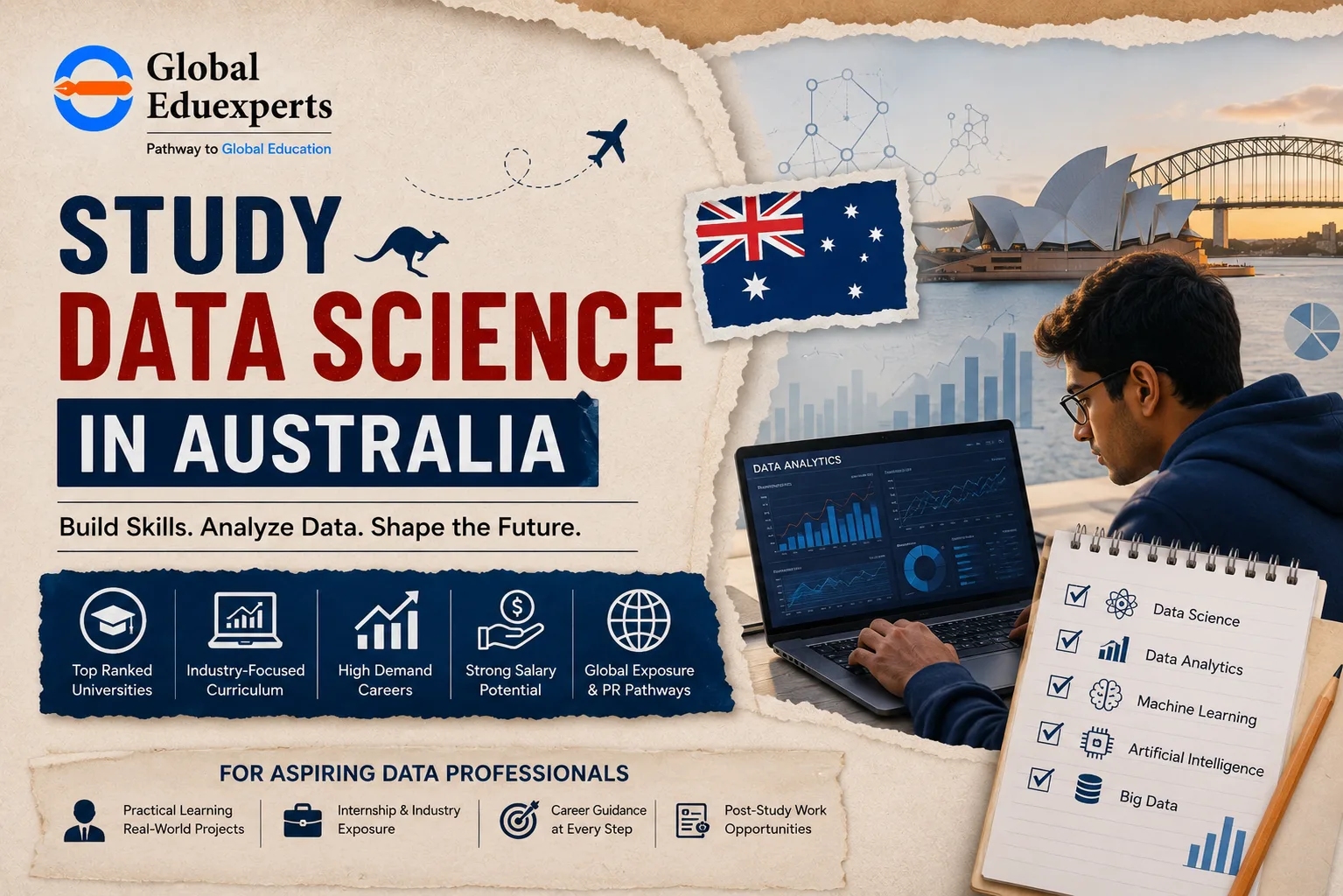
Studying Data Science in Australia gives students access to globally recognized universities, industry-focused learning, and career opportunities i...

Planning a Germany student visa requires more than submitting an application. It involves understanding the visa processing timeline, preparing the...

Sending a child abroad for higher education involves much more than securing university admission. It requires careful planning around course selec...
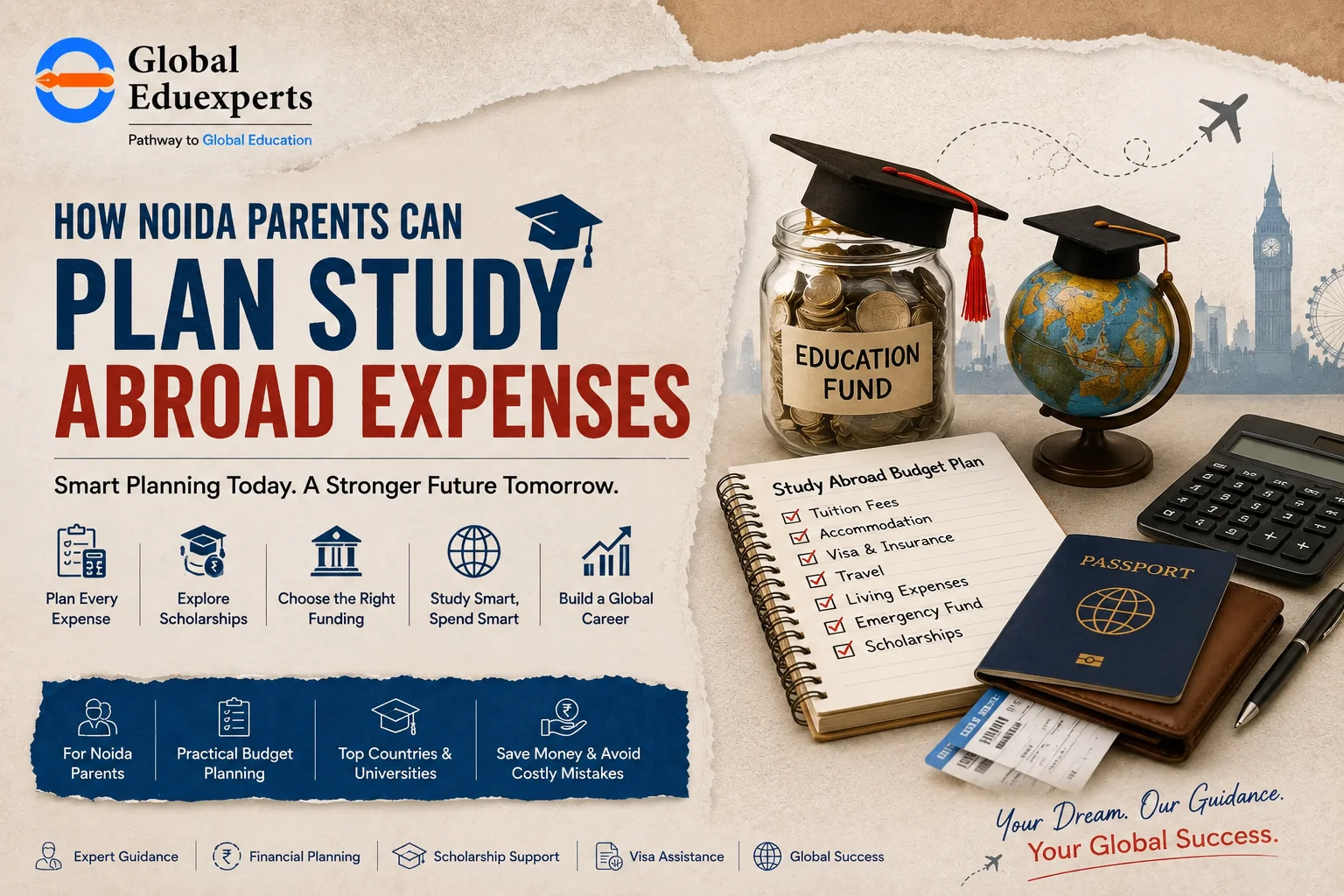
Planning study abroad expenses helps Noida parents make informed financial decisions before their child begins the overseas admission process. By u...
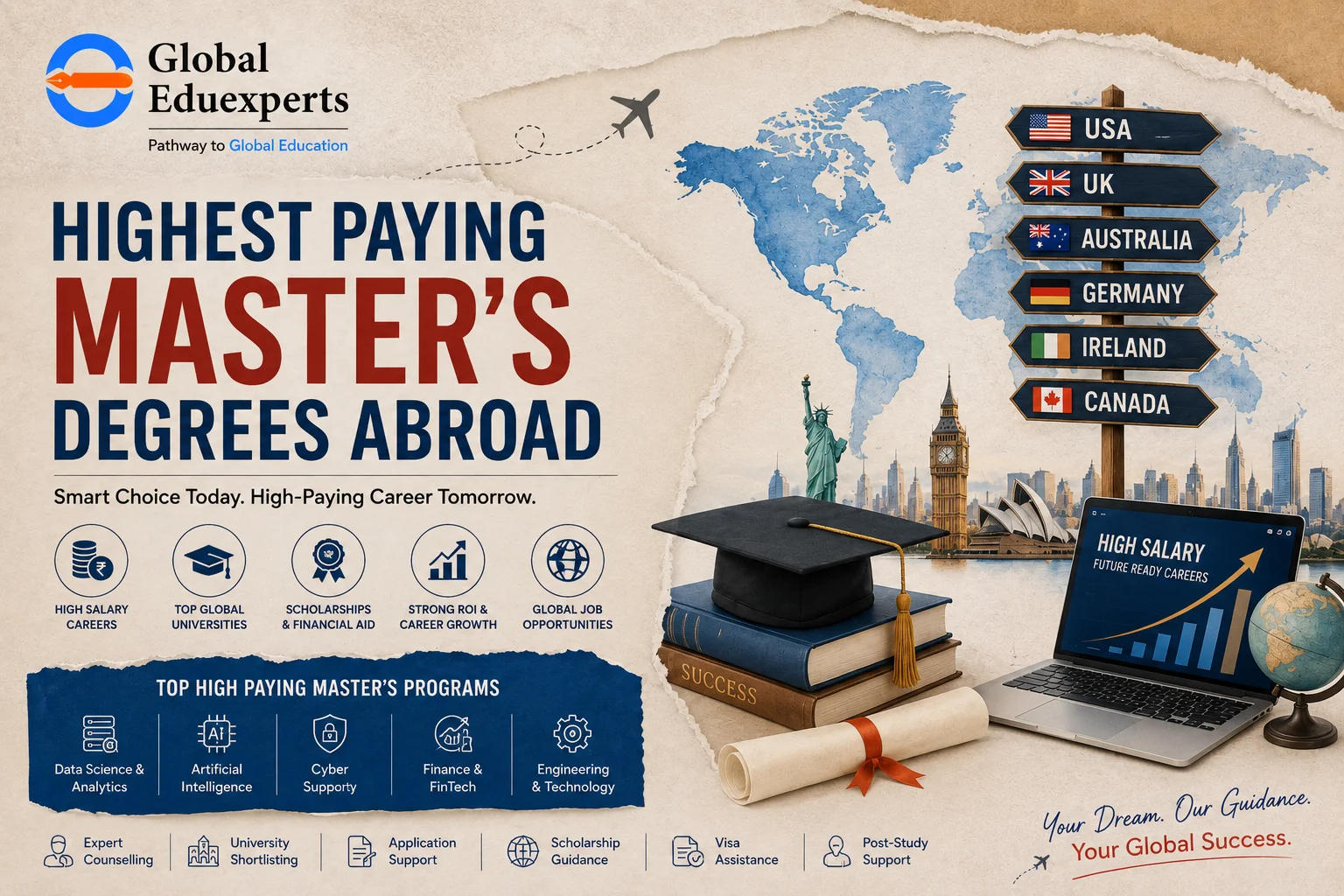
Pursuing one of the highest paying master's degrees abroad helps Indian students build specialized skills that are in demand across global industri...

Understanding Student Visa Rules is essential for Indian students planning to study abroad in an evolving immigration landscape. This guide explain...


