 Request a Call Back
 WhatsApp
 +91 9999666611
Studying Data Science in Australia gives students access to globally recognized universities, industry-focused learning, and career opportunities i...


Guidance for courses in usa helps Indian students choose the right academic program based on their career goals, eligibility, and budget. It supports students who are unsure about course selection by providing clarity on options like STEM, MBA, and short-term programs, leading to better decisions, smoother admissions, and stronger career outcomes after studying in the USA.
For a lot of students, the idea of studying in the US starts with a simple thought. Better education. Better exposure. Better opportunities.
But when they actually begin exploring courses in USA, things get more specific. It’s no longer just about going abroad. It becomes about choosing the right course, in the right field, at the right time.
Because in the US system, your course is not just a degree. It shapes everything that comes after.
The US education system is flexible. That’s the first thing students notice.
You’re not locked into rigid structures. You can:
This flexibility is one reason why courses in USA for Indian students attract so much attention.
But flexibility comes with responsibility.
Students who don’t have clarity early on often feel lost. Too many options… not enough direction.
Despite higher costs compared to other countries, demand hasn’t dropped. If anything, it has become more focused.
Here’s why:
Over the years, students have realized something.
It’s not just about studying. It’s about positioning yourself for the future.
This is where things get serious.
Two students can study in the same country, even the same university… and still have completely different outcomes.
Why?
Because of the course they choose.
For example, students choosing STEM courses in USA for Indian students often get extended work opportunities. Those choosing business programs need to focus more on specialization to stand out.
Same country. Different outcomes.
There’s a pattern that keeps repeating.
Students initially focus on:
And then later realize the course itself mattered more.
Not always. But often enough to notice.
If you are exploring Best courses to study in USA, the decision should not start with “which country” or “which university.”
It should start with:
What do I actually want to build after this course?
Because in the US system, your course is not just education.
It’s direction.
And getting that right early changes everything that follows.
If you are planning your study journey, explore STUDY IN USA to understand how universities, career exposure, and course options come together for long-term growth.
Students usually start with a broad question: What should I study in the US?
Then it narrows down quickly. What actually leads to a job?
Because exploring courses in usa without thinking about outcomes… that’s where confusion begins.
Over the years, a few fields have consistently held their ground. Not because they are “popular,” but because they align with real demand.
Here’s a practical breakdown students often work with:
| Course Area | Why It Stands Out | Typical Roles |
|---|---|---|
| Engineering | Strong technical demand, consistent hiring | Mechanical, Civil, Electrical roles |
| IT and Computer Science | Rapid industry growth, global relevance | Software Developer, Data Analyst |
| Business and Management | Broad scope, depends on specialization | Marketing, Finance, Operations |
| Healthcare | Stable demand, long-term need | Nursing, Public Health, Healthcare Admin |
These are not trends that came up recently. They’ve been steady.
But outcomes still depend on how you approach them.
There’s a reason searches like high demand courses in usa and top courses to study in usa keep pointing to the same areas.
These fields:
For example, IT and Data-related roles continue to grow. Engineering remains strong in specific sectors. Healthcare demand hasn’t really slowed down.
Business is different. It works well… but only when chosen carefully.
Here’s something that doesn’t get discussed enough.
Students pick a field… but not a direction within it.
It looks fine at the beginning. Later, it creates gaps.
This is where things change.
In USA courses for Indian students, specialization matters more than the base degree.
Small shift. Big difference.
Instead of asking:
Which course is most popular?
Ask:
Which course connects clearly with a job role I can realistically pursue?
Because in Best courses in USA for Indian students, the real value comes from alignment.
Not popularity.
And that’s what students usually understand… just a little later than they should.
To match your course choice with the right destination, compare options like STUDY IN UK and STUDY IN AUSTRALIA where similar programs offer different career pathways and global exposure.
At some point, most students hear about STEM. And then the question follows almost immediately… Is it really worth it?
Because when exploring courses in usa, STEM programs are often positioned as the “safe” option. Better jobs. Higher salaries. Longer stay-back period.
All true. But not automatic.
STEM stands for Science, Technology, Engineering, and Mathematics. In the US, these programs come with a specific advantage.
Students in STEM courses in USA for Indian students can apply for extended work authorization after graduation. This gives them more time to gain experience and find long-term opportunities.
That extra time matters.
But it only helps if the skills match industry expectations.
Some programs keep showing stronger outcomes across universities:
| Course Area | Why It Performs Well | Typical Career Paths |
|---|---|---|
| Data Science and Analytics | High demand across industries | Data Analyst, Data Scientist |
| Computer Science and IT | Core technology roles, global relevance | Software Developer, Systems Engineer |
| Engineering (Mechanical, Electrical, Civil) | Industry-specific demand | Design Engineer, Project Engineer |
| Artificial Intelligence and Machine Learning | Emerging field with strong growth | AI Engineer, ML Specialist |
These are often considered high demand courses in usa, not just because of salary, but because companies actively hire from these fields.
Here’s where STEM stands out.
The extended work period after graduation allows students to:
Without that window, things can feel rushed.
But again… time alone doesn’t guarantee results.
There’s a common assumption.
Choose STEM → get a job → everything works out.
It doesn’t always play out that way.
Students sometimes:
The reality is slightly different.
The market rewards capability, not just the course label.
STEM programs can offer strong returns. But only when approached realistically.
If you are exploring Best courses to study in usa, the question should not be:
Is STEM better than other options?
It should be:
Am I prepared for the level of skill and effort this field requires?
Because in the end, courses in usa don’t create outcomes on their own.
How you use them… does.
If you are considering technical programs, explore USA Eligibility to understand academic requirements and how STEM profiles are evaluated for admissions.
Business programs in the US have always attracted attention. That hasn’t changed. What has changed… is how students approach them.
Earlier, the idea was simple. Do an MBA. Get a good job. Move forward.
Now, when students explore courses in usa, especially business programs, the thinking is more specific. More cautious.
Because not all business degrees lead to the same outcome.
Despite rising costs, demand for MBA courses in USA for Indian students remains strong.
There are a few reasons behind that:
But here’s the shift.
Students are no longer choosing “MBA” as a category. They are choosing what sits inside it.
This is where outcomes start to separate.
| Specialization | Why It Works | Career Direction |
|---|---|---|
| Business Analytics | Data-driven decision making is in demand | Analyst, Strategy roles |
| Finance | Core business function, stable demand | Investment, Corporate Finance |
| Marketing | Evolving with digital and consumer trends | Brand, Digital Marketing |
| Supply Chain / Operations | Practical roles across industries | Logistics, Operations Manager |
General business programs still exist. But they don’t stand out the same way anymore.
Students choosing specialized tracks tend to find clearer pathways.
Here’s something students don’t always factor in early.
Many top MBA programs expect:
Without that, even a strong university may not deliver expected outcomes.
That’s why some students now explore alternatives like online mba programs in usa or specialized master’s programs instead of jumping directly into a traditional MBA.
There’s still a common assumption.
MBA = high salary.
Sometimes yes. Sometimes not immediately.
Students who:
…tend to move forward faster.
Others take longer to find their position in the market.
If you are exploring Best courses to study in usa, especially in business, the decision should not start with:
Which MBA program is best?
It should start with:
What role do I want after completing this course?
Because in business education, clarity matters more than the degree title.
And that clarity… is what turns a course into an actual opportunity.
Before choosing business programs, it helps to review USA Cost to understand how MBA and specialized courses differ in investment and return potential.
Healthcare sounds stable. It usually is. That’s why it keeps appearing in conversations around courses in usa.
But this is one area where expectations and reality don’t always match.
Students often assume: medical field = clear path.
In the US… the path exists, but it’s not always straightforward.
Not every student entering healthcare becomes a doctor. In fact, most don’t.
Common options include:
| Course Area | What It Involves | Typical Roles |
|---|---|---|
| Nursing | Patient care, clinical practice | Registered Nurse |
| Public Health | Health systems, policy, research | Public Health Analyst |
| Healthcare Administration | Management of hospitals, systems | Hospital Admin, Operations |
| Pharmacy / Biomedical | Drug research, lab work | Research Associate |
MBBS in the US is a different structure altogether. It requires a pre-med path, entrance exams, and significant investment. That’s why many students exploring mbbs in abroad for indian students at low cost look at other countries instead.
Despite the complexity, interest hasn’t dropped.
Healthcare offers:
In countries like the US, demand for healthcare professionals continues to grow. Especially in nursing and public health.
But demand alone doesn’t simplify the process.
This is where things get real.
Healthcare programs often require:
For example:
So entry is one step. Practice is another.
Many students focus only on admission.
Later, they realize:
This doesn’t mean healthcare is a bad choice. It just requires more planning.
If you are exploring courses in usa for indian students in healthcare, it helps to ask:
Am I prepared for the full journey, not just the degree?
Because healthcare careers are not built in one step.
They are built in stages.
And understanding that early makes the process more manageable.
Healthcare programs often involve additional requirements, so reviewing USA Eligibility can help you understand academic expectations and licensing pathways clearly.
Not every student wants a long, expensive degree.
Some are looking for something faster. More focused. A way to enter the job market without spending years in classrooms. That’s where short term courses in usa start getting attention.
But this path works differently. And not always the way students expect.
These are usually:
Duration can range from a few months to about a year.
| Course Type | Duration | Focus Area |
|---|---|---|
| Certificate Programs | 6–12 months | Technical or business skills |
| Diploma Courses | 1–2 years | Practical, job-oriented learning |
| Specialized Training | 3–9 months | Specific industry skills |
These programs are designed to build skills quickly. Not theory-heavy. More practical.
There’s a clear reason behind the interest in Short term courses in USA for international students.
For some students, this feels more practical than committing to a 2–4 year program.
Short-term courses tend to perform better in areas like:
These fields value skills and hands-on experience.
So even a shorter program can create opportunities… if used correctly.
Here’s where things need to be understood clearly.
Not all short-term courses:
Some students complete the course… and then struggle with next steps.
Because the pathway is not always clearly defined.
Yes, these programs are more affordable than full degrees.
But the return depends on:
A short course alone doesn’t guarantee results.
If you are exploring courses in usa through short-term programs, the better question is:
What skill will I walk away with that someone is willing to pay for?
Because in this path, outcomes depend less on the course name… and more on what you can actually do after it.
And that difference becomes very clear once the course ends.
If you are looking for faster and affordable options, comparing Dubai Cost and STUDY IN ASIA can help you explore alternative short-term and skill-based programs.
This is where most decisions slow down.
Students explore courses in usa, shortlist options, compare universities… and then the numbers show up. Not just tuition. Everything around it.
And suddenly, the question changes from what should I study to can I actually afford this?
Not all programs cost the same. In fact, the difference can be significant.
| Course Type | Tuition Fees (Per Year) | What Influences Cost |
|---|---|---|
| Undergraduate courses in USA | $20,000 – $40,000 | University type, location |
| Master’s programs | $25,000 – $50,000 | Specialization, ranking |
| MBA in USA | $40,000 – $80,000+ | Business school reputation |
| PhD programs in USA | Often funded / $0 – $20,000 | Research funding availability |
| Short term courses in USA | $5,000 – $20,000 | Duration and skill focus |
These are not fixed numbers. But they reflect what most students actually see.
Here’s something students don’t expect at first.
Two universities offering the same course can have completely different fees.
Why?
So while comparing Affordable courses in USA for Indian students, the university choice matters as much as the course.
This is where planning usually gets incomplete.
Students calculate tuition. Maybe accommodation.
But the full picture includes:
These add up quickly. Especially in cities with higher living costs.
This is often underestimated.
So the course doesn’t just decide what you study. It decides how much you invest… and what you might get back.
Instead of asking:
Which course is cheapest?
Ask:
Which course offers a manageable cost with a realistic return?
Because in courses in usa for indian students, the goal is not just to reduce spending.
It is to make sure that spending actually leads somewhere.
And that clarity… makes the difference between a planned decision and a rushed one.
To plan your budget better, explore USA Cost and Australia Cost to compare tuition fees and living expenses across different study destinations.
This is usually the first real checkpoint.
Students explore courses in usa, shortlist programs, compare universities… and then pause.
Do I even qualify for this?
Because eligibility in the US is not one single rule. It shifts slightly based on the course, university, and level of study.
Still, there is a base structure most students follow.
Your previous education decides where you begin.
But here’s something students notice later.
Marks alone don’t decide everything. Relevance of your background matters just as much.
Since courses are taught in English, proficiency tests are standard.
Common options include:
| Test | Typical Score Range |
|---|---|
| IELTS | 6.0 – 7.5 |
| TOEFL | 80 – 100+ |
| Duolingo (some universities) | 100 – 130 |
Some universities waive these if your education was in English. But not always.
Policies differ. And assumptions here can delay applications.
Depending on the course, you may need:
Not every university requires them now. Some have made them optional. But for competitive programs, they still add weight to your profile.
Beyond scores, applications usually include:
This part looks routine. But it’s where profiles start to differentiate.
A strong SOP can support an average profile. A weak one can reduce a strong profile.
There’s a common assumption.
Eligibility is fixed. Either you qualify or you don’t.
In reality, it’s more flexible.
Some universities are strict. Others are open if your overall profile makes sense.
That’s why students exploring courses in usa for indian students often receive different outcomes from different universities.
Instead of asking:
Do I meet the exact requirement?
Ask:
Does my profile make sense for this course?
Because eligibility in the US is not just about numbers.
It’s about alignment.
And getting that right… makes the rest of the process smoother.
For a clearer understanding of admission requirements, explore USA Eligibility and UK Eligibility to compare academic criteria across top destinations.
This is where most decisions quietly go wrong.
Students start with courses in usa, scroll through options, check what’s trending… and then pick something that sounds right. Not necessarily something that fits.
It doesn’t feel like a mistake in the beginning. It shows up later.
Instead of asking:
Which course should I choose?
Flip it.
What role do I want after this?
Because the US system rewards clarity. If you know the direction, choosing between best courses to study in usa becomes easier.
For example:
Same country. Different paths.
There’s always a “popular” course every year.
AI. Data Science. Business Analytics.
All strong options. But not for everyone.
Students sometimes:
It doesn’t always work that way.
Demand helps. But only when you can match it.
This is where alignment matters.
Without this, even high demand courses in usa can feel difficult.
A course is not just classes and exams.
It connects to:
Students exploring courses in usa for indian students often realize this after reaching there.
The course shapes the environment you enter.
There is no perfect course.
Every option has trade-offs.
Some offer better jobs but require strong skills.
Some are easier academically but offer fewer opportunities.
The balance matters.
Before finalizing, ask yourself:
Because choosing from top courses to study in usa is not about picking the best option.
It’s about picking the right one for you.
And that decision… usually defines everything that follows.
If you are still deciding your path, comparing STUDY IN IRELAND and STUDY IN EUROPE can help you balance career opportunities with course flexibility.
This is the part most students are actually thinking about from day one.
They explore courses in usa, compare universities, calculate costs… but somewhere in the background, one question keeps repeating.
What happens after I graduate?
Because the degree is only one part of the plan. What comes next… that’s what really matters.
The US offers a structured pathway called OPT (Optional Practical Training).
This gives students time to:
That extra time can make a big difference.
But it’s still a window. Not a guarantee.
Some sectors consistently hire students after graduation:
| Industry | Typical Roles |
|---|---|
| Technology | Software Developer, Data Analyst |
| Engineering | Design, Project, Manufacturing roles |
| Finance and Business | Analyst, Consultant, Operations |
| Healthcare (non-clinical roles) | Administration, Research |
These align closely with high demand courses in usa.
But hiring depends on skills, not just the degree.
This is where expectations need to stay realistic.
Location, role, and company all affect this.
Some students start higher. Some take time to reach there.
It’s not always immediate.
Here’s the reality that often gets missed.
Getting a job during OPT is possible. Many students do.
But long-term stay depends on:
And these factors are not always predictable.
Students who move forward faster usually:
It’s rarely just about the university name.
Instead of asking:
Will I get a job after studying in the US?
Ask:
Am I preparing myself to compete in that market?
Because in courses in usa for indian students, opportunities exist.
But outcomes depend on how you use the time you have.
And that difference becomes very clear once the course ends.
To understand post-study career options better, explore USA Visa and Australia Visa to compare work opportunities and stay-back options after graduation.
Please Note: All information is sourced from web and the data may vary. kindly refer to Official or Government websites for the most accurate details.
Explore top ses universities, MBA, Masters, PhD & nursing courses. Expert study abroad consultants in Noida offering free counseling for ses education.
The best courses to study in usa usually include fields like Computer Science, Data Science, Engineering, Business Analytics, and Healthcare. These areas align with global job demand and offer better career opportunities. However, the right course depends on your background and career goals, not just popularity or salary expectations.
The cost of courses in usa for indian students varies widely. Undergraduate programs can range from $20,000 to $40,000 per year, while master’s and MBA programs can go higher. Living expenses also add to the total cost, so overall planning should include tuition, accommodation, and daily expenses.
Yes, STEM courses in USA for Indian students often provide better job opportunities because they align with high-demand industries like technology and engineering. They also offer extended work options after graduation. However, outcomes still depend on your skills and practical experience, not just the course category.
For many courses in usa, exams like GRE or GMAT are required, especially for competitive programs. However, some universities have made them optional. Even when not mandatory, strong scores can improve your profile and increase your chances of admission in better universities.
Yes, students can work through OPT after completing courses in usa for indian students. This allows temporary work experience in the US. Job opportunities depend on your course, skills, and market demand. Long-term career stability may require employer sponsorship, which varies based on industry and performance.
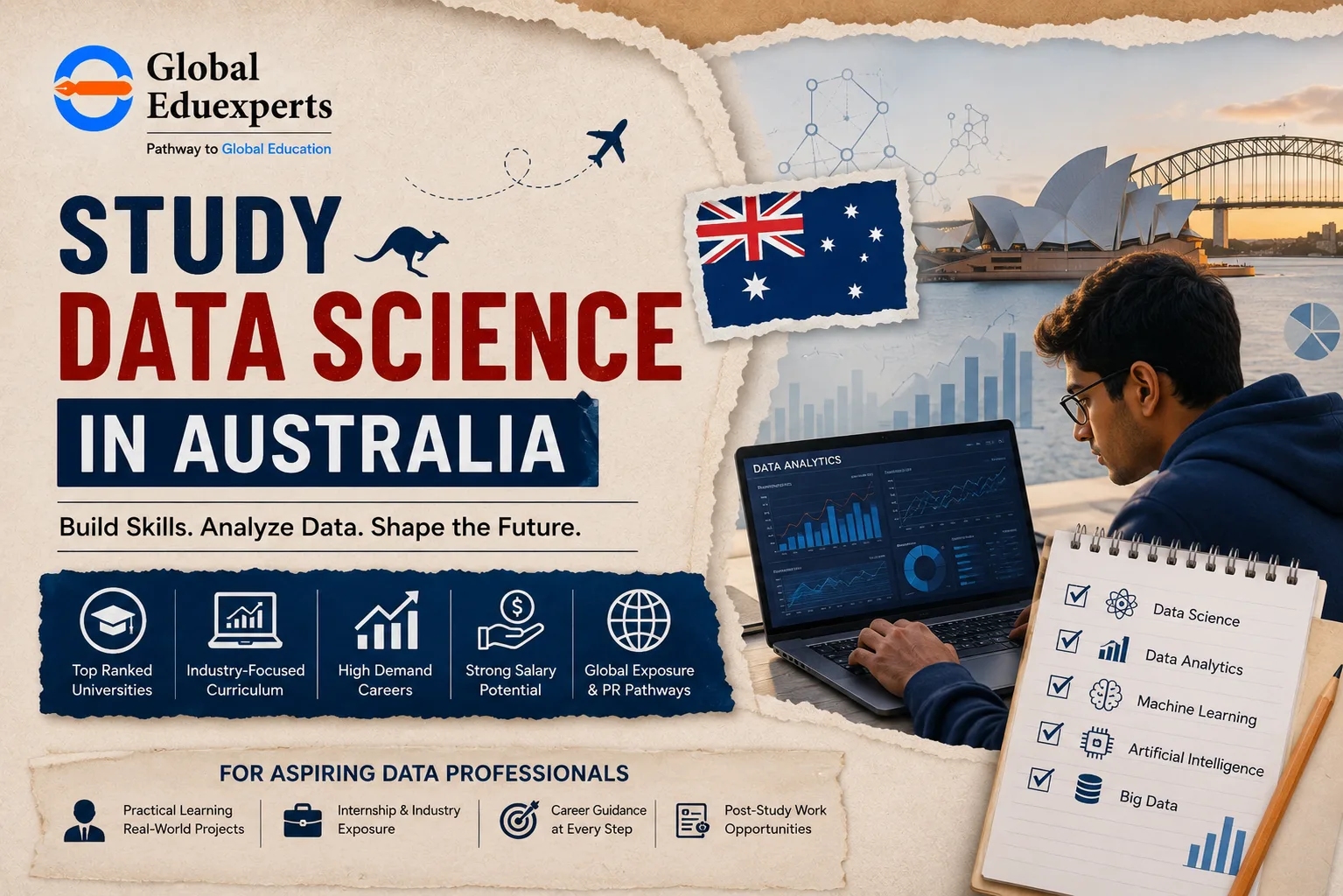
Studying Data Science in Australia gives students access to globally recognized universities, industry-focused learning, and career opportunities i...

Planning a Germany student visa requires more than submitting an application. It involves understanding the visa processing timeline, preparing the...

Sending a child abroad for higher education involves much more than securing university admission. It requires careful planning around course selec...
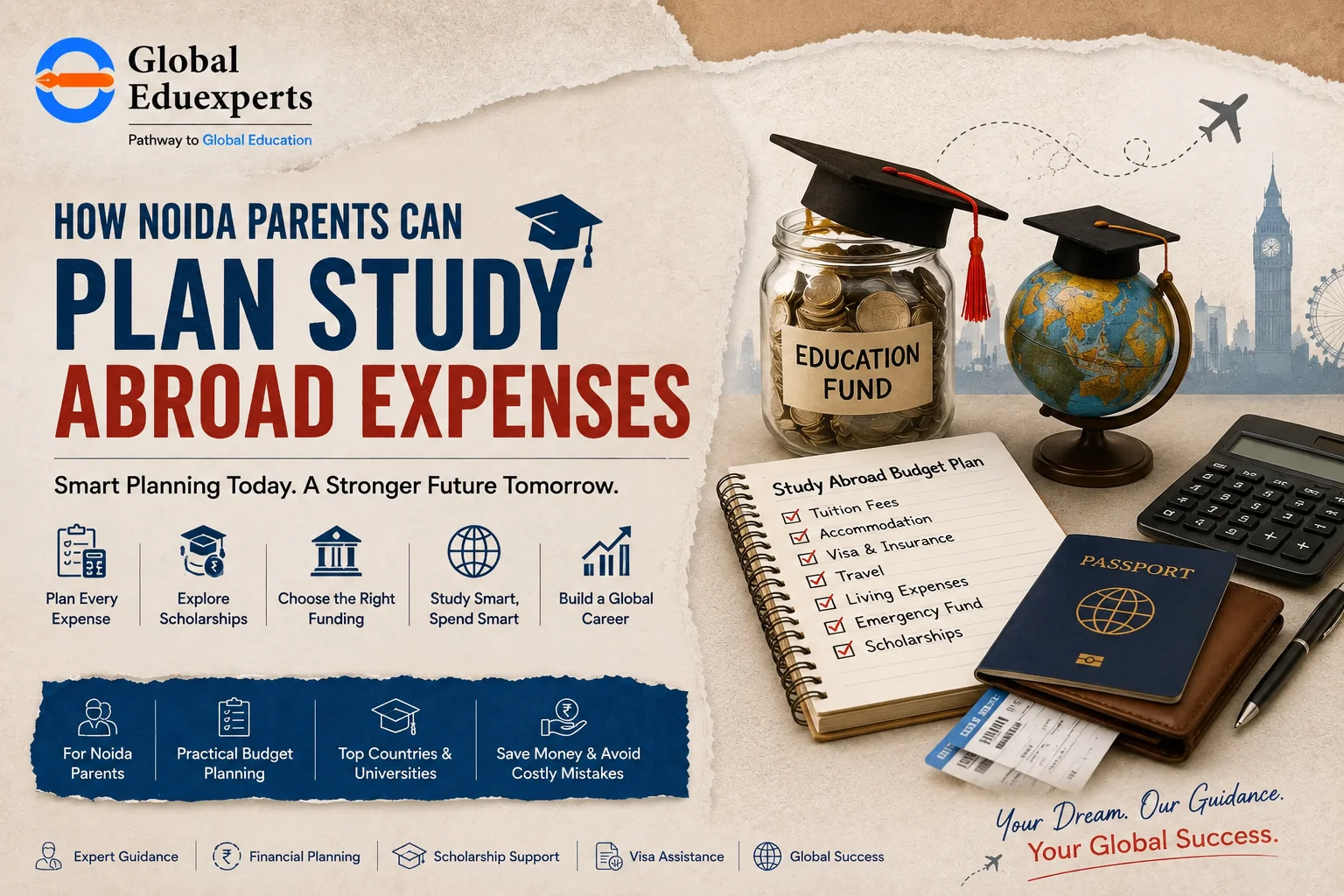
Planning study abroad expenses helps Noida parents make informed financial decisions before their child begins the overseas admission process. By u...
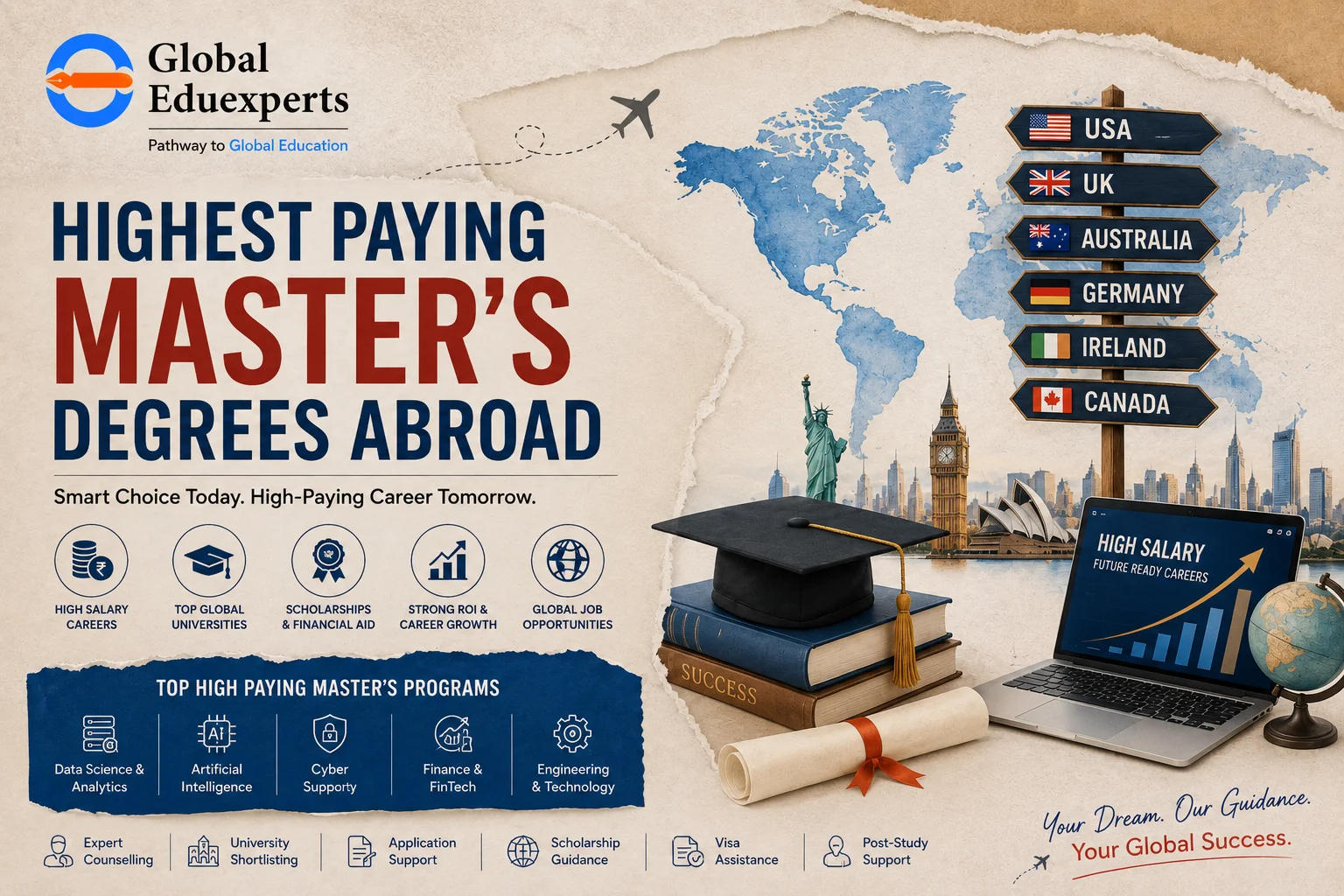
Pursuing one of the highest paying master's degrees abroad helps Indian students build specialized skills that are in demand across global industri...

Understanding Student Visa Rules is essential for Indian students planning to study abroad in an evolving immigration landscape. This guide explain...


