 Request a Call Back
 WhatsApp
 +91 9999666611
Studying Data Science in Australia gives students access to globally recognized universities, industry-focused learning, and career opportunities i...


Guidance for courses in uk helps Indian students identify the right academic program based on their career goals, eligibility, and budget. It supports students who are unsure about course selection by providing clarity on options like one-year master’s, MBA, and STEM programs, leading to better decisions, smoother admissions, and stronger career opportunities after studying in the UK.
Choosing the UK is rarely a random decision.
Most students don’t start with “UK.” They start with a goal. Better career. International exposure. Faster results. And somewhere along the way, the UK starts fitting into that picture.
When you begin exploring courses in uk, a few things stand out quickly. The system is structured. The timeline is shorter. And the expectations… are slightly higher than many students initially assume.
The biggest shift is not popularity. It’s clarity.
Students today are more aware of what they want. And the UK aligns well with that mindset.
But here’s the part that often gets missed.
The UK rewards students who already have direction.
The structure is different from what many students are used to.
There’s less room to experiment.
In masters in uk, the pace is fast. You move from lectures to deadlines to projects quickly. Some students adapt easily. Others take time… and that time is limited.
This is where outcomes start to change.
Two students can study in the same university. Same city. Same intake.
Different results.
Because of the course they chose.
That’s why searches like best courses to study in uk are not just about popularity anymore. They’re about alignment.
The UK is not the cheapest destination.
But it can be efficient.
Still, costs include:
So planning matters. A lot.
The UK offers a Graduate Route (PSW), giving students time to work after graduation.
This helps. But it doesn’t guarantee outcomes.
Students who move forward faster usually:
Others take time to adjust.
And sometimes, that adjustment takes longer than expected.
The UK is not just about studying.
It’s about:
If you’re exploring courses in uk for indian students, the real question is not:
Is the UK a good option?
It is:
Am I ready to use what the UK offers effectively?
Because the opportunity is there.
But the outcome depends on how you approach it.
And that difference… becomes clear once you’re inside the system.
Confused about requirements? Explore UK Eligibility to understand admission criteria before applying.
For many students, the UK feels like a practical choice. Not the cheapest. Not the easiest. But… efficient.
When they start exploring courses in uk, the appeal usually comes down to one thing. Time.
A one-year master’s. Faster completion. Earlier entry into the job market. On paper, it looks like a smart trade.
But once you go deeper, it becomes less about speed… and more about direction.
The UK education system is structured, but not rigid.
You’ll find:
That last part changes everything.
In masters in uk, students cover what others take two years to complete… in one. Which means the pace is intense. There’s not much room to “figure things out later.”
You either adapt quickly. Or you feel it.
Despite rising costs, demand for courses in UK for Indian students hasn’t slowed down.
There are clear reasons:
But here’s what’s changed over time.
Students are not just choosing the UK. They are choosing how to use it.
This is where things become more personal.
Two students can study in the same university… and end up in completely different situations.
The difference?
The course they chose.
For example, students opting for high demand courses in uk like data analytics or healthcare tend to find clearer pathways. Others take longer to adjust.
There’s a pattern that shows up again and again.
Students initially focus on:
And only later realize the course itself mattered more.
Not always. But often enough to notice.
If you are exploring best courses to study in uk, the decision should not start with:
Which university should I choose?
It should start with:
What do I want to do after this course?
Because in the UK system, the course is not just academic.
It defines your pace, your exposure, and often… your next step.
And once that becomes clear, everything else starts falling into place.
Still comparing options? Explore Study in USA to understand course differences and career scope.
This is usually where things get more specific.
Students begin with courses in uk, scroll through options, compare universities… and then pause.
Which course actually leads somewhere?
Because not every degree opens the same doors. Some move you forward faster. Others take time to show results.
Over time, a few fields have stayed relevant across industries:
| Course Area | Why It Works | Typical Career Direction |
|---|---|---|
| Business and Management | Flexible, wide industry scope | Marketing, Finance, Consulting |
| Data Science and Analytics | Growing demand across sectors | Data Analyst, Business Analyst |
| Engineering | Strong technical foundation | Design, Construction, Manufacturing |
| Healthcare and Public Health | Stable demand, long-term growth | Healthcare Admin, Clinical roles |
These are often seen as high demand courses in uk because they align with real market needs, not just academic trends.
There’s a pattern here.
These courses:
For example, data-related roles have expanded across industries. Healthcare demand continues regardless of economic shifts. Engineering remains relevant where infrastructure and technology grow.
Business… works well too, but not in every form.
Here’s something that doesn’t get discussed openly.
Students choose a field… but not a direction within it.
At first, it feels manageable. Later, it creates gaps.
In UK courses for Indian students, specialization makes a visible difference.
Small shift in choice. Big shift in outcome.
Instead of asking:
Which course is most popular?
Ask:
Which course connects clearly with a job I can realistically pursue?
Because in top courses to study in uk, value doesn’t come from popularity.
It comes from alignment.
And that’s what most students understand… just a little later than they should.
Planning your budget? Check UK Cost to understand full expenses before choosing a course.
This is usually the point where the UK starts making sense.
Students exploring courses in uk often compare countries… and then notice something different.
One year.
A full master’s degree completed in a shorter time. It sounds efficient. And in many ways, it is.
But it also changes how you approach everything.
In the UK, most masters in uk are designed to be completed within 12 months.
No long breaks. No extended timelines.
You typically go through:
It moves fast. There’s very little time to pause and adjust.
Some students adapt quickly. Others feel the pace early.
A few programs consistently attract attention:
| Course Area | Why It’s Preferred | Typical Direction |
|---|---|---|
| Business Analytics | Strong demand, practical skills | Data-driven business roles |
| Finance | Established career pathway | Banking, investment roles |
| Marketing | Evolving with digital trends | Brand, digital marketing |
| Data Science | High demand across industries | Analyst, tech roles |
These are often considered best courses to study in uk because they connect directly with industry needs.
This is where the UK stands out.
Compared to countries with two-year programs:
For many, this makes the overall investment more manageable.
But there’s a trade-off.
Less time to explore. Less time to recover if things don’t go as planned.
In longer programs (like in the US or other countries), students get:
In the UK, you compress that experience into a shorter window.
It works well for students who already have clarity.
It feels challenging for those still figuring things out.
There’s a pattern here too.
Students who enter with:
…tend to benefit the most from one-year programs.
Others take time to adjust, and that time is limited.
If you are considering UK courses for Indian students, the question is not:
Is a one-year master’s better?
It is:
Am I ready for the pace and clarity this structure requires?
Because the advantage of saving time only works… when you use that time well.
And that’s where the real difference shows.
Want to stay and work after study? Read UK Visa guide to understand PSW and work options.
STEM keeps coming up for a reason.
When students explore courses in uk, especially with a long-term career in mind, technical programs start to feel like a safer direction. Not guaranteed… but more predictable.
Because demand exists. And it’s not limited to one industry.
STEM includes Science, Technology, Engineering, and Mathematics. In the UK, these programs are closely aligned with industry needs.
You’ll find:
That’s why STEM courses in UK for Indian students continue to attract attention.
But here’s the part that matters.
Demand is there. But it doesn’t remove the need for skill.
Some fields continue to perform better than others:
| Course Area | Why It Works | Career Direction |
|---|---|---|
| Data Science and Analytics | High demand across sectors | Data Analyst, Business Intelligence |
| Computer Science and IT | Core technology roles | Software Developer, Systems Engineer |
| Engineering (Mechanical, Civil, Electrical) | Industry-specific demand | Design, Infrastructure, Manufacturing |
| Artificial Intelligence and Machine Learning | Rapid growth area | AI Engineer, ML Specialist |
These are often considered high demand courses in uk because companies actively hire from these areas.
There’s a pattern here.
Technical roles:
That’s why students choosing best courses in UK for Indian students often lean toward technical programs.
But stability comes with expectations.
You are expected to perform.
Here’s something that doesn’t always get discussed.
Students sometimes:
It rarely works that way.
Technical fields are less forgiving. You either build capability… or you feel the gap quickly.
STEM courses can offer:
But only when used correctly.
Without effort, the advantage fades.
If you are exploring courses in uk, the question should not be:
Is STEM the best option?
It should be:
Am I prepared to build the level of skill this field demands?
Because in the end, the course opens the door.
But what you bring into it… decides how far you go.
Looking to reduce MBA costs? Explore UK Scholarships to find funding opportunities.
Business courses in the UK still attract a lot of attention. But the way students approach them has changed.
Earlier, it was simple. Do an MBA. Build a career. Move ahead.
Now, when students explore courses in uk, especially business programs, they look deeper. Not just at the degree… but what sits inside it.
Because not all business courses lead to the same outcome.
The UK has built a strong reputation in business education.
Students choosing MBA courses in UK for Indian students often look for:
But here’s what’s changed.
Students are no longer choosing “MBA” as a label. They are choosing direction.
This is where things start separating.
| Specialization | Why It Works | Career Direction |
|---|---|---|
| Business Analytics | Data-driven decision making | Analyst, strategy roles |
| Finance | Core industry demand | Banking, investment roles |
| Marketing | Strong shift toward digital | Brand, digital marketing |
| Supply Chain and Operations | Practical, process-driven roles | Logistics, operations management |
General business programs still exist. But they don’t stand out the same way anymore.
Specialization brings clarity.
The UK’s one-year structure applies here too.
It looks efficient. And it is.
But it also means:
Students with clear goals benefit more from this structure.
There’s still a common assumption.
MBA = strong salary.
Sometimes yes. But not always immediately.
Students who:
…tend to move faster.
Others take time to find their position.
If you are exploring best courses to study in uk, especially in business, the question should not be:
Which MBA is the best?
It should be:
What role do I want after completing this course?
Because in business education, the degree opens the door.
But clarity decides where that door leads.
Exploring faster career options? Check Study in Australia for similar short-term programs.
Not everyone wants a long academic route.
Some students look at courses in uk and think differently. Less time. Lower cost. Faster entry into work. That’s where short term courses in uk start making sense.
But this path works on a different logic. It’s quicker… but also more direct.
These programs are usually:
They are designed to build specific skills, not broad academic knowledge.
| Course Type | Duration | Focus Area |
|---|---|---|
| Certificate Programs | 3–12 months | Skill-based learning |
| Diploma Courses | 1–2 years | Practical + academic mix |
| Professional Courses | 6–12 months | Industry-specific skills |
The structure is simple. Learn something specific. Apply it quickly.
There’s a clear reason why short term courses in UK for international students are gaining attention.
For some students, this feels more practical than spending years on a traditional degree.
Short-term programs tend to perform better in fields like:
These areas value skills more than long academic timelines.
So even a shorter course can create opportunities… if aligned properly.
Here’s where clarity matters.
Not all short-term courses:
Some students complete the course and then feel uncertain about the next step.
Because the pathway is not always structured.
Yes, these programs are more affordable than full degrees.
But the return depends on:
The course alone doesn’t guarantee results.
If you are exploring courses in uk through short-term options, the better question is:
What skill will I leave with that someone is willing to hire for?
Because in this path, results don’t come from duration.
They come from capability.
And that becomes clear very quickly once the course ends.
Comparing budgets? Explore Ireland Cost to see alternative affordable options.
This is where plans become real.
Students explore courses in uk, shortlist options, compare universities… and then the numbers come in. Not just tuition. Everything around it.
And suddenly, the question changes.
Is this manageable for me?
Because the UK is not the cheapest option. But it can be efficient… if planned properly.
Not every program costs the same. In fact, the difference can be quite noticeable.
| Course Type | Tuition Fees (Per Year) | What Affects Cost |
|---|---|---|
| Undergraduate courses in UK | £10,000 – £20,000 | University and subject |
| Masters in UK | £12,000 – £25,000 | Specialization, ranking |
| MBA in UK | £20,000 – £40,000+ | Business school reputation |
| Short term courses in UK | £3,000 – £15,000 | Duration and skill focus |
These are average ranges. Actual costs shift depending on the university and course.
This is where students often underestimate.
Beyond tuition, you need to account for:
On average, living costs can range from:
And it changes based on the city.
London feels different from smaller cities. That difference shows up quickly.
Here’s something students notice later.
Two universities offering similar courses in UK for Indian students can have very different fees.
Why?
So the university choice affects cost just as much as the course itself.
This part is often overlooked.
So the course doesn’t just decide what you study.
It decides how much you spend… and what you expect in return.
Instead of asking:
Which course is cheapest?
Ask:
Which course gives me a manageable cost with a realistic outcome?
Because in courses in uk, saving money at the start is helpful.
But what matters more is whether that investment actually supports your next step.
And that’s where the real clarity comes in.
Want a backup option? Check USA Eligibility to compare admission requirements.
This is usually where plans get tested.
Students explore courses in uk, shortlist options, compare universities… and then pause.
Do I actually qualify for this?
Because eligibility in the UK looks simple on the surface. But once you go deeper, it varies depending on the course and university.
Your previous education sets the starting point.
But here’s something students notice later.
Marks matter. But relevance matters just as much.
Since courses are taught in English, language proficiency is mandatory.
Common tests include:
| Test | Typical Score Range |
|---|---|
| IELTS | 6.0 – 7.5 |
| PTE | 58 – 75 |
| TOEFL (accepted in some cases) | 80 – 100+ |
Some universities offer waivers if your previous education was in English. But policies differ.
Assumptions here often lead to delays.
Beyond academics and language scores, most applications require:
These documents don’t look complicated. But they carry more weight than students expect.
A strong SOP can support an average profile. A weak one can affect a strong application.
There’s a common belief.
Eligibility is fixed. Either you meet it or you don’t.
In reality, it’s more flexible.
Some universities are strict. Others consider the overall profile. That’s why students applying for courses in UK for Indian students often receive different responses from different universities.
Instead of asking:
Do I meet every requirement perfectly?
Ask:
Does my profile make sense for this course?
Because eligibility in the UK is not just about scores.
It’s about alignment.
And once that aligns, the process becomes much clearer.
Looking for budget-friendly alternatives? Explore Study in Europe for more options.
This is where most decisions quietly shift.
Students browse courses in uk, look at what’s popular, check what friends are choosing… and then pick something that feels “safe.” It usually makes sense at the time.
Later, the gaps show up.
Instead of asking:
Which course should I choose?
Flip it.
What role do I want after this?
Because in the UK system, courses are shorter and more focused. If your direction is unclear, that one year moves quickly.
For example:
Once the outcome is clear, choosing among best courses to study in uk becomes easier.
Every year, certain courses gain attention.
Data Science. Business Analytics. Finance.
All strong fields. But not automatically right for everyone.
Students sometimes:
It doesn’t always work that way.
Demand helps. But only if you can match it.
This part often gets overlooked.
Without alignment, even high demand courses in uk can feel difficult.
A course is not just lectures and assignments.
It connects to:
Students exploring courses in UK for Indian students often realize this once they are already there.
The course shapes your environment.
There is no perfect course.
Every option has trade-offs.
Some offer better opportunities but require higher effort.
Some feel easier academically but offer limited growth.
The balance matters.
Before finalizing, ask yourself:
Because choosing from top courses to study in uk is not about picking the best option.
It’s about choosing the right one for you.
And that decision… tends to define everything that follows.
Planning global career options? Explore Study in Dubai and Study in Asia for emerging job markets.
This is the part most students are actually thinking about from the beginning.
They explore courses in uk, compare universities, calculate costs… but the real question stays in the background.
What happens after I finish the course?
Because the degree is only one step. What comes after it… that’s where everything starts to matter.
The UK offers a Graduate Route, often referred to as PSW.
This gives students time to:
It’s a structured window. But still a window.
Some sectors consistently open doors for students:
| Industry | Typical Roles |
|---|---|
| Technology | Software Developer, Data Analyst |
| Finance and Business | Analyst, Consultant, Operations |
| Healthcare | Public Health, Administration |
| Engineering | Design, Infrastructure, Manufacturing |
These align closely with high demand courses in uk, which is why course selection and job opportunities often connect directly.
This is where expectations need to stay grounded.
Location, industry, and role all influence this.
Some students move faster. Others take time.
It’s not always immediate.
Here’s the reality that doesn’t always get discussed openly.
Getting a job during the PSW period is possible. Many students do.
But long-term stability depends on:
And these factors can shift.
Students who move forward more smoothly usually:
It’s rarely just about the university name.
Instead of asking:
Will I get a job after studying in the UK?
Ask:
Am I preparing myself to compete in that environment?
Because in courses in uk for indian students, opportunities exist.
But outcomes depend on how you use the time you have.
And that difference becomes very clear… once the course ends.
Please Note: All information is sourced from web and the data may vary. kindly refer to Official or Government websites for the most accurate details.
Explore top es universities, MBA, Masters, PhD & nursing courses. Expert study abroad consultants in Noida offering free counseling for es education.
The best courses to study in uk usually include Business Analytics, Data Science, Finance, Engineering, and Healthcare. These fields align with industry demand and offer better job opportunities after graduation. However, the right course depends on your background and career goals, not just popularity or salary expectations.
The cost of courses in uk for indian students varies depending on the program. Tuition fees typically range from £10,000 to £25,000 per year, while living expenses can be around £800 to £1,200 per month. The total investment depends on course type, university, and city.
Yes, masters in uk are popular because they save time and reduce overall living costs. They allow students to complete their degree faster and enter the job market early. However, the pace is intensive, so students need clarity and preparation to fully benefit from the program.
Most universities require English proficiency tests like IELTS or PTE for courses in uk. Typical IELTS scores range from 6.0 to 7.5 depending on the course. Some universities offer waivers if your previous education was in English, but requirements vary by institution.
Yes, students can work through the Graduate Route (PSW) after completing courses in uk for indian students, which allows them to stay and work for up to 2 years. Job opportunities depend on your course, skills, and market demand. Long-term career stability may require employer sponsorship.
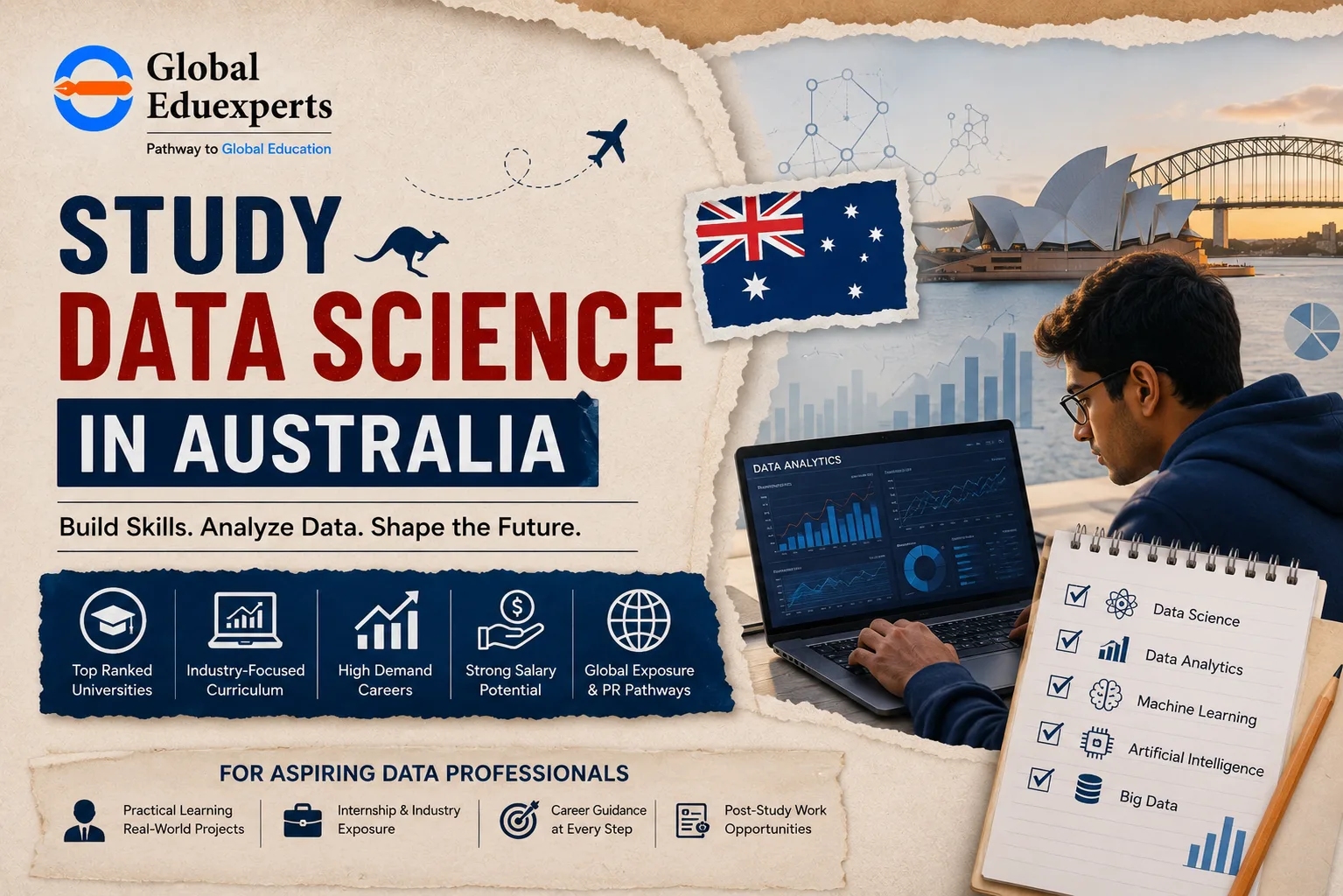
Studying Data Science in Australia gives students access to globally recognized universities, industry-focused learning, and career opportunities i...

Planning a Germany student visa requires more than submitting an application. It involves understanding the visa processing timeline, preparing the...

Sending a child abroad for higher education involves much more than securing university admission. It requires careful planning around course selec...
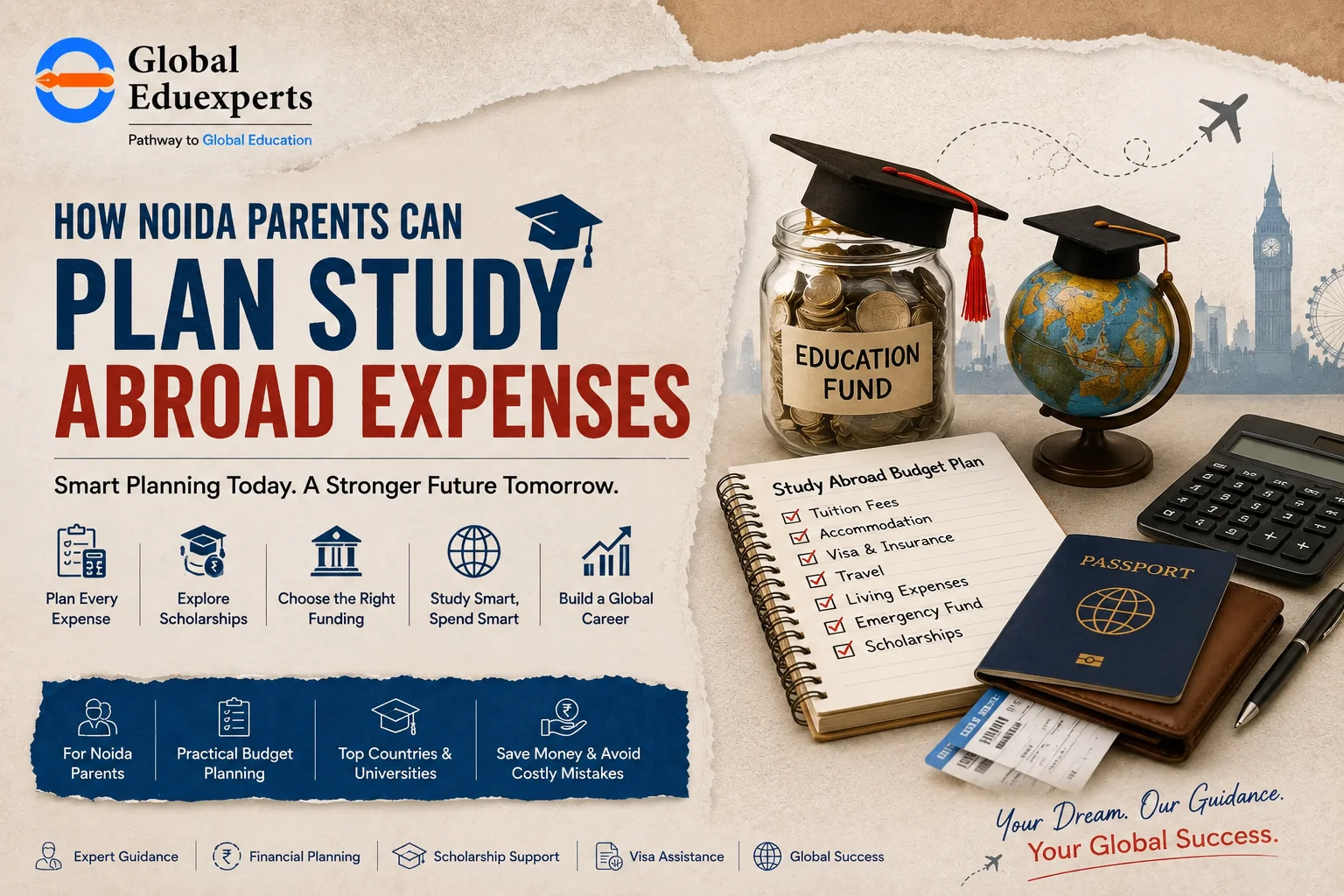
Planning study abroad expenses helps Noida parents make informed financial decisions before their child begins the overseas admission process. By u...
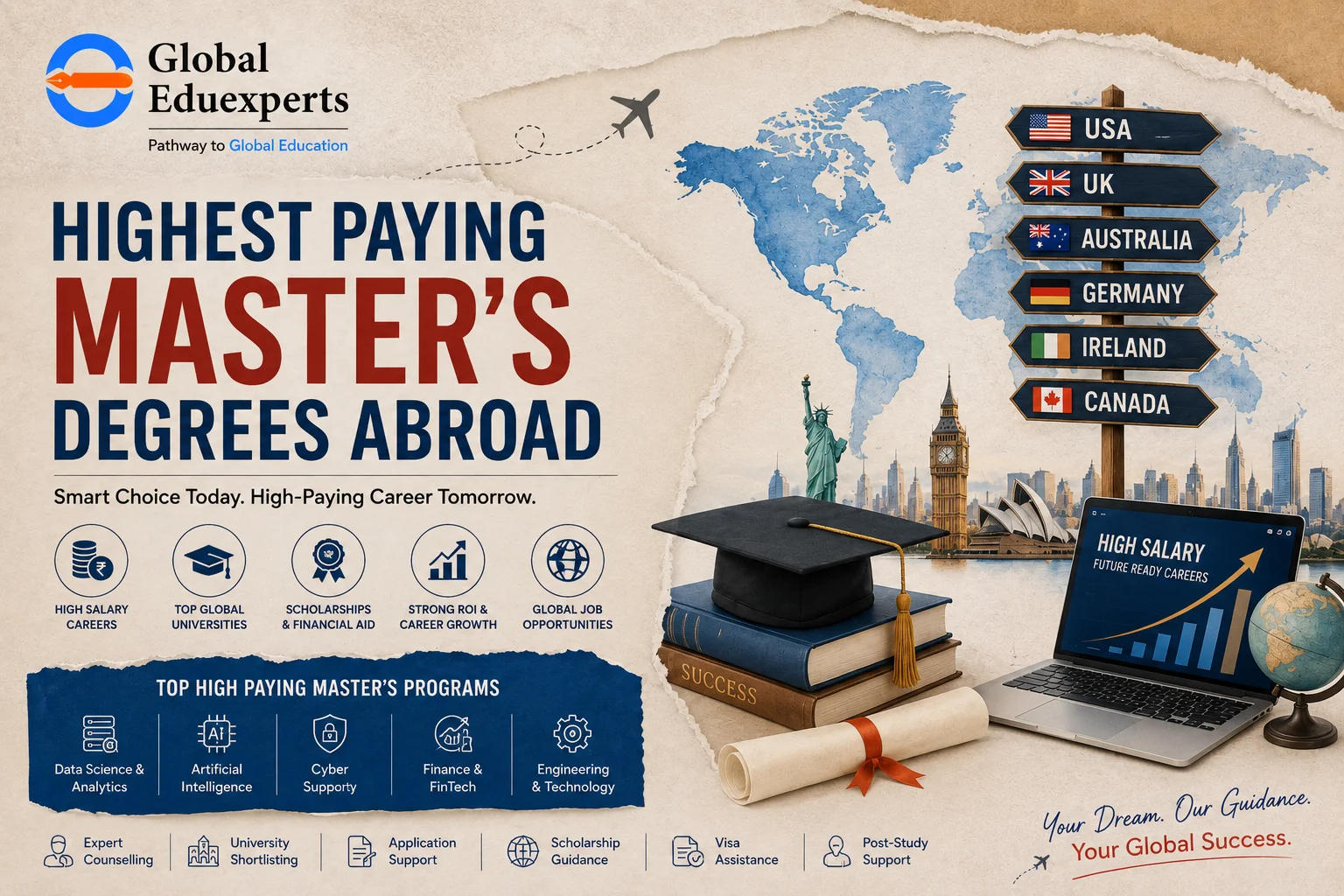
Pursuing one of the highest paying master's degrees abroad helps Indian students build specialized skills that are in demand across global industri...

Understanding Student Visa Rules is essential for Indian students planning to study abroad in an evolving immigration landscape. This guide explain...


